My Reflections on Educ. 6713
Reflections on My GAME Plan

According to Cennamo, Ross, and Ertmer (2010), it is important to set goals for your own professional growth. I created two goals or myself in the beginning of this course. The GAME plan includes setting goals, taking action, monitoring progress, and evaluating whether goals were achieved (Cennamo et al, 2010). Reflecting on my GAME plan, I can see that it will take longer than I expected to reach the goals I set for myself. While progress has been made, I have had to change the plan as time has gone on.


Goal 1: To model ethical use of Internet resources by citing references and holding students accountable by requiring a reference section for all digital projects for all information, graphics, or videos students use. The goal is based on the standard 4a, Advocate, model, and teach legal and ethical use of digital information and technology (ISTE, 2008).

Goal 2: To participate in a leadership role to
increase technology infusion and to help increase my colleagues use of technology
in their classroom. The goal is based on the standard, 5b Exhibit leadership by
participating in decision making and developing technology skills of others
(ISTE, 2008).

For
goal 1, I have included in my own worksheets and notes where I found the information
and images I have used. I have also included references as part of each project
I am having my students create. Correctly citing sources is included in the
rubric for grading students’ projects. I feel that I have reached this goal and
plan to continue modeling the ethical use of information for my students. Finding
the California library standards for citing references was a big help to
justify requiring students to cite their references. There is no district wide
policy for acceptable use for students. I want students to realize that copying
and pasting someone else’s work is wrong and is considered plagiarism. I never
really considered the fact that when I copy an image without citing where it
came from, I am modeling for the students that it is okay to not give credit to
the owner of the image. I am now making a point to show students where I got
images and information from.

Goal
2 has been a challenge for me to achieve. During week 4, when I monitored my
progress, I realized that the goal I created was too much to be able to
accomplish. I decided that creating a technology committee this year was not
going to happen. I have a principal that does not understand technology so does
not see the need. I plan to work with him to get him to see the importance of
technology in today’s educational system. I am hoping to get a tech committee
started at the beginning of next year. I have been working with colleagues to
increase their use of technology. I want to continue working with more teachers
next semester. I hope to be able to teach anyone that wants more help using
technology to incorporate more of the 21st century skills we need our students
to have.
Using
the GAME plan with my students should be an interesting task. I would like to
have my advisory students create a goal that they would like to achieve by the
end of the semester. I then would have the students write up a plan on how they
will reach their goal. Throughout the semester, I will have the students
reflect on their progress towards reaching their goal and see if they need to
modify their plan. It would be great to see the students achieve their goals.
If they reach their goal, I will have them create a new goal to work towards.
If their goal is not met, I will have them continue to work towards completing
their goal. I could also have my science students create a goal to reach by the
end of the semester and have them plan, monitor, and evaluate their progress
towards achieving their goal.
 Problem-based
learning (PBL) allows students to learn content as they learn higher order
thinking skills (Laureate Education Inc., 2009b). PBL allows students to master content
standards using higher order thinking skills to find a possible solution to a
problem the teacher provides to the students. PBL is an instructional strategy
that I have not widely implemented into my classroom instruction because I have
never attended a staff development or training that addressed PBL. I want to
use PBL more in my teaching so I am going to try and find a training or webinar
that I can complete to learn about creating good problems for students to
research.
Problem-based
learning (PBL) allows students to learn content as they learn higher order
thinking skills (Laureate Education Inc., 2009b). PBL allows students to master content
standards using higher order thinking skills to find a possible solution to a
problem the teacher provides to the students. PBL is an instructional strategy
that I have not widely implemented into my classroom instruction because I have
never attended a staff development or training that addressed PBL. I want to
use PBL more in my teaching so I am going to try and find a training or webinar
that I can complete to learn about creating good problems for students to
research. 

Adjustments
to Instructional Practices
This
course has continued to teach me about the importance of integrating technology
into my classroom. I have learned about problem-based learning, online
collaboration, and digital storytelling. Each of these strategies incorporates
technology to make learning more relevant and interesting for students. I have
been using some of these strategies without realizing what the strategy was
called. I hope to continue to incorporate more opportunities for students to
use these great strategies in my class. The challenge I face is access to
technology which I am trying to work on by getting more technology into the
school.
Problem-based
learning (PBL) allows students to learn content as they learn higher order
thinking skills (Laureate Education Inc., 2009b). PBL allows students to master content
standards using higher order thinking skills to find a possible solution to a
problem the teacher provides to the students. PBL is an instructional strategy
that I have not widely implemented into my classroom instruction because I have
never attended a staff development or training that addressed PBL. I want to
use PBL more in my teaching so I am going to try and find a training or webinar
that I can complete to learn about creating good problems for students to
research.
Online
collaboration is something I have only done with my students a few times. . Benefits
of online collaboration include: allowing students to work in and out of class,
challenges students to perform at higher levels, and allows learning language
from native speakers (Laureate Education Inc., 2009c). I think the experiences
I have gained throughout this course will help me better integrate online
collaboration and social networking into my teaching because before starting at
Walden, I had never participated in a blog, discussion, wiki, or any of the
other web 2.0 tools I have learned to use throughout my courses. I plan to incorporate
at least one online collaboration project each quarter for students to
complete.
Digital
storytelling is the sharing of words, thoughts, music, pictures, music,
narration or video (Laureate Education Inc., 2009b). Digital storytelling
reaches across the curriculum and allows students to use their higher level
thinking skills in any subject. Digital storytelling builds skills in research,
analyzing, creative thinking, problem solving, and interpersonal (Laureate
Education Inc., 2009b). I had my students create a children’s book this year on
the cell. It was the first time I ever used digital storytelling and it was an
exhausting but enriching experience for my students and me. I definitely will
have students do this project again next year. I also plan on having students
create a story of a body system during second semester. Since my students have
already done this once, I hope to see some very amazing projects.
Throughout
this course, I have learned to set goals for myself that are reachable even if
they have to be modified. Plans may have to change due to unexpected situations
but as long as progress is being made, I feel like I am accomplishing
something. Technology should play an important role in educating today’s
students. I am continuously working to learn and use new technology that will
help my students become more successful, learn the standards, and learn the
21st century skills they need to compete in today’s global society.
References
Cennamo, K.,
Ross, J., & Ertmer, P. (2010). Technology integration for
meaningful classroom use: A standards-based approach. Belmont, CA:
Wadsworth, Cengage Learning.
International
Society for Technology in Education. (2008). National education standards for
teachers (NETS-T). Retrieved from: http://www.iste.org/standards/nets-for-teachers
Laureate
Education, Inc. (Executive Producer). (2009a). Integrating technology
across the content areas: Spotlight on technology: Digital storytelling, part 1.
Baltimore, MD: Author.
Laureate
Education, Inc. (Executive Producer). (2009b). Integrating technology
across the content areas: Spotlight on technology: Problem-based learning, part
1. Baltimore, MD: Author.
Laureate
Education, Inc. (Executive Producer). (2009c). Integrating technology
across the content areas: Spotlight on technology: Social networking and online
collaboration, part 2. Baltimore, MD: Author.
Image References
Academic
integrity image retrieved from: http://www.tarleton.edu/library/images/documentation/wordle_images.jpg
Collaboration
image retrieved from: http://in.kahootz.com/Portals/184327/images/Collaboration%20Image.jpg
Digital
storytelling image retrieved from: http://www.giveitaway.net/uploads/9/9/0/3/9903157/6134959_orig.png
Goal image
retrieved from: http://www.mindpowereducation.com/images/mpe_career_edge.jpg
Knowledge sharing
image retrieved from: http://comps.canstockphoto.com/can-stock-photo_csp15283527.jpg
PBL image
retrieved from: http://www.crazyteacherlady.com/uploads/5/1/4/8/5148626/4067159_orig.png
Struggling
scientist image retrieved from: http://educationaltechnologyguy.blogspot.com/2011_02_01_archive.html
Self-reflection
image retrieved from: http://myworldmark.files.wordpress.com/2013/05/self-reflection.jpg
Technology
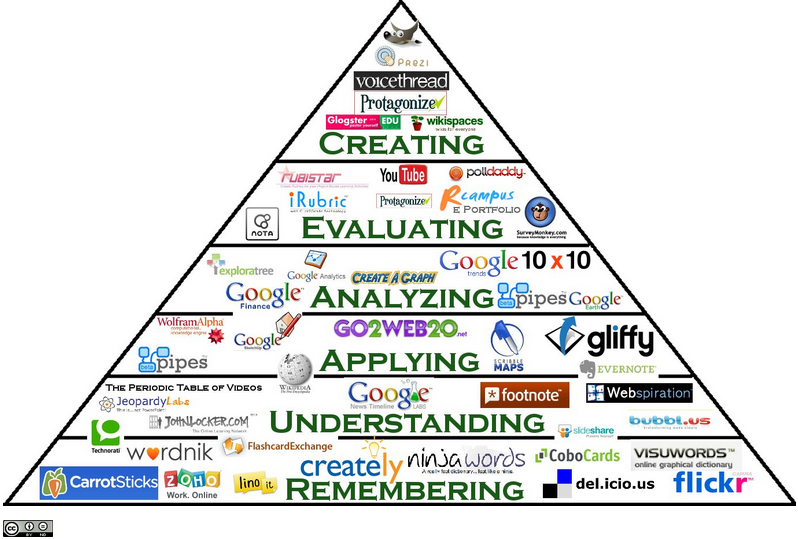
pyramid retrieved from: http://classroomaid.files.wordpress.com/2012/04/teaching-with-technology.png


No comments:
Post a Comment